
Parks | December 17, 2025
Introducing New York City's First Chestnut Trail
 The Chestnut Trail’s opening is as much of a milestone for NYRP’s decades-long stewardship of Highbridge Park as it is for the return of the American chestnut to New York City. Photo credit: Chris Palermo
 For the first time in over a century, New Yorkers can now hike into an urban chestnut grove.
In partnership with NYC Parks, New York Restoration Project invites the public to experience and learn about urban forestry and American chestnut restoration along New York City’s first official Chestnut Trail.
The forested path in Northern Manhattan’s Highbridge Park offers beautiful views of the Harlem River as it leads north from the Washington Bridge to a grove of more than 200 thriving hybrid American chestnut trees. NYRP teamed up with NYC Parks in 2017 to plant the grove, establishing the largest urban trial to restore this functionally extinct species to its native range.
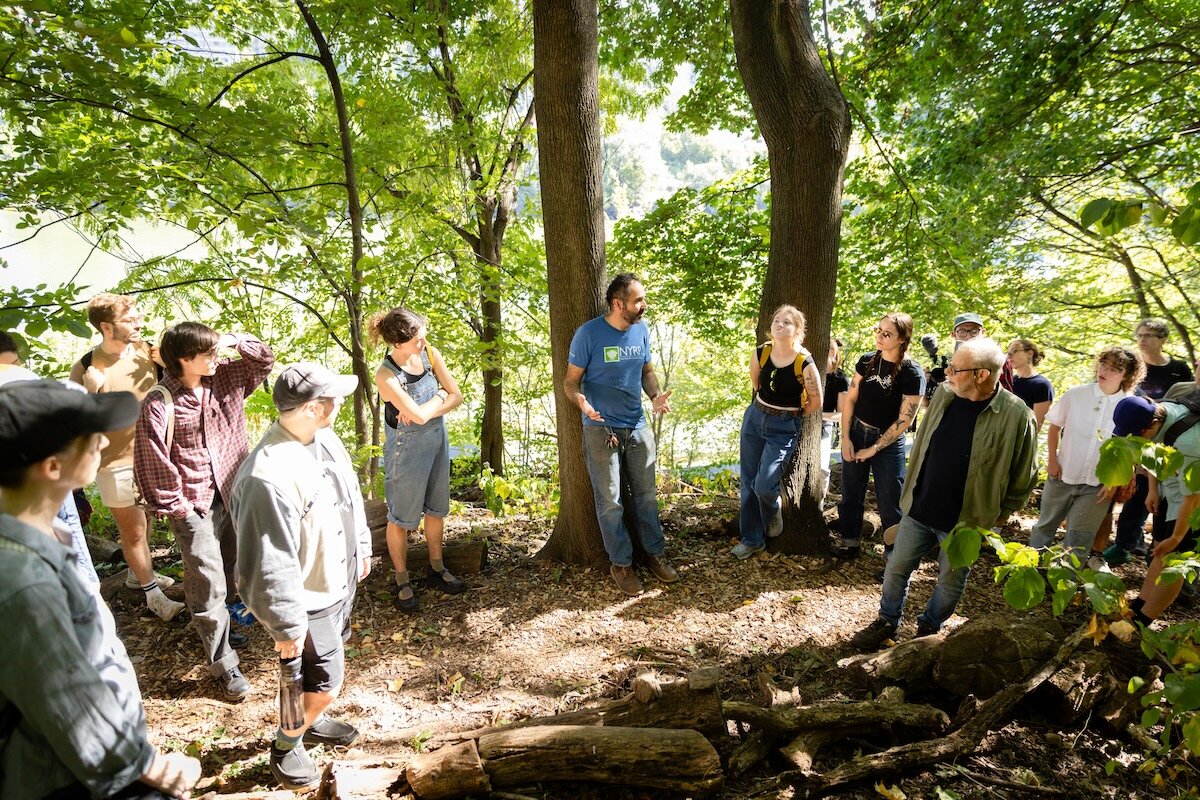
Jason Smith (center), NYRP’s Director of Northern Manhattan Parks, leads a tour of the Chestnut Trail in October 2025. Photo credit: Chris Palermo
The chestnuts’ planting and survival in Highbridge was never guaranteed. For nearly a century, the American chestnut has largely succumbed to the chestnut blight, a fungal disease that kills the trees’ inner bark, which can prevent the flow of nutrients and water to the leaves, flowers, and stems. Scientists estimate there were roughly four billion chestnut trees in the Eastern United States before the blight hit in the early twentieth century, dealing a devastating blow to native forest ecosystems.
Additionally, when NYRP first began working in Highbridge in the late 1990s, the park was an informal dumping ground strewn with abandoned appliances, household trash, and cut-up cars. Invasive species had also suffocated the sloping urban forest, requiring meticulous hands-on removal to avoid herbicide application.
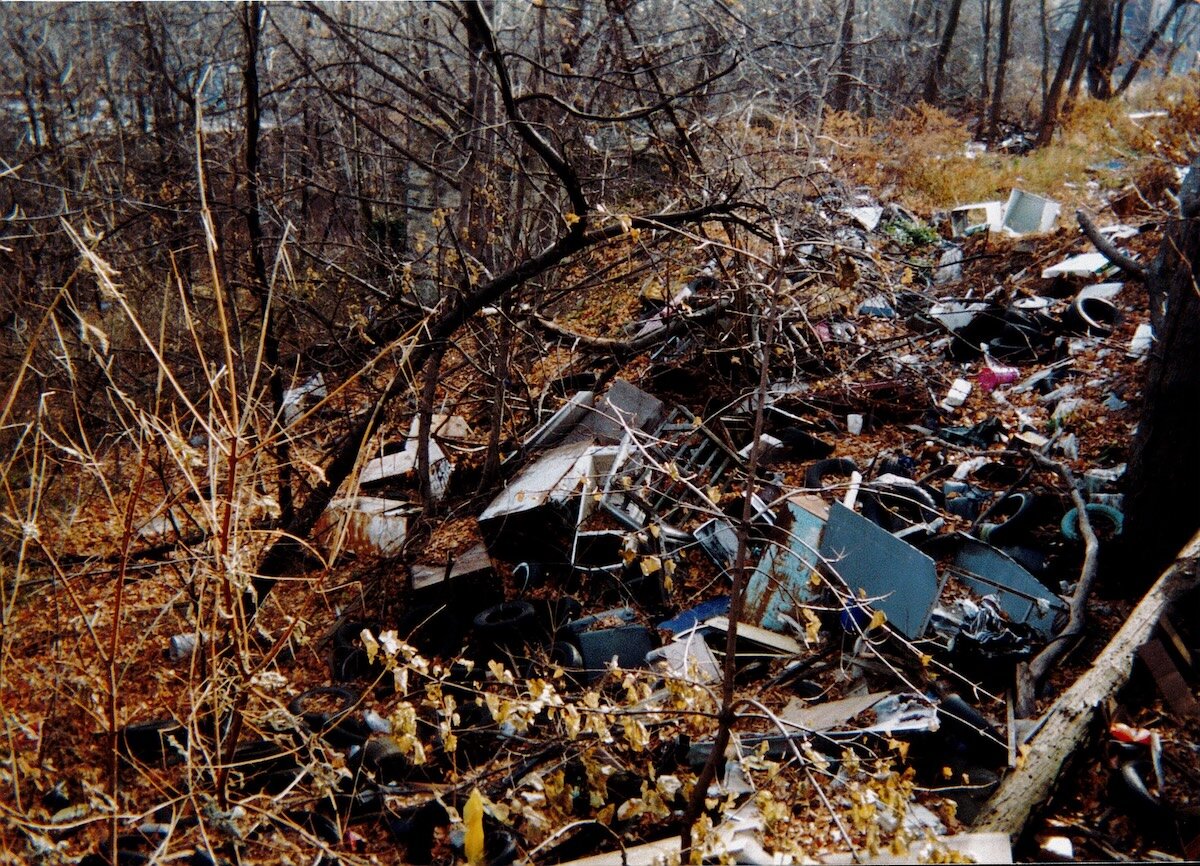
Northern Manhattan’s Highbridge Park in the mid-1990s before NYRP’s intervention
Almost 30 years later, the trail’s opening is as much of a milestone for NYRP’s decades-long stewardship and restoration of Highbridge Park as it is for the return of the American chestnut to New York City.
The initial creation of the Chestnut Trail was simply practical; NYRP crews needed a way to access the site for cleanup.
“When we first started working in this section of Highbridge Park, it was one of the most disturbed areas we managed—overgrown with invasive species and impassable,” recalls Jason Smith, NYRP’s Director of Northern Manhattan Parks. As NYRP diligently cleared acres of knotweed and garbage by hand, a sunny slope prime for tree-planting emerged. “When do you get new acreage of unobstructed sunlight in Manhattan?” adds Jason. What was once a neglected hillside became an ideal opportunity for NYRP to join the greater American chestnut restoration movement.
In addition to NYC Parks, NYRP partnered with The American Chestnut Foundation (TACF) for the Highbridge planting. For decades, TACF has been instrumental in the species’ revival by creating the hybrid variety that combines the blight resistance of the Chinese chestnut (a genetic cousin) with the American species. In the eight years since this initial planting, the Highbridge trees have thrived by multiple measures: NYRP has lost only one tree to blight, and several trees have produced nuts since 2023.
“The Highbridge planting is unique in its purpose and its extent setting the stage of not just, ‘Hey, here’s a chestnut, isn’t that cool?’ But really, let’s make it a part of this urban forestry community,” explains Sara Fern Fitzsimmons, former Director of Restoration for TACF. “Urban forestry has been around for a long time, but urban forestry in the realm of restoration of tree species is new. This is a unique and innovative project.”
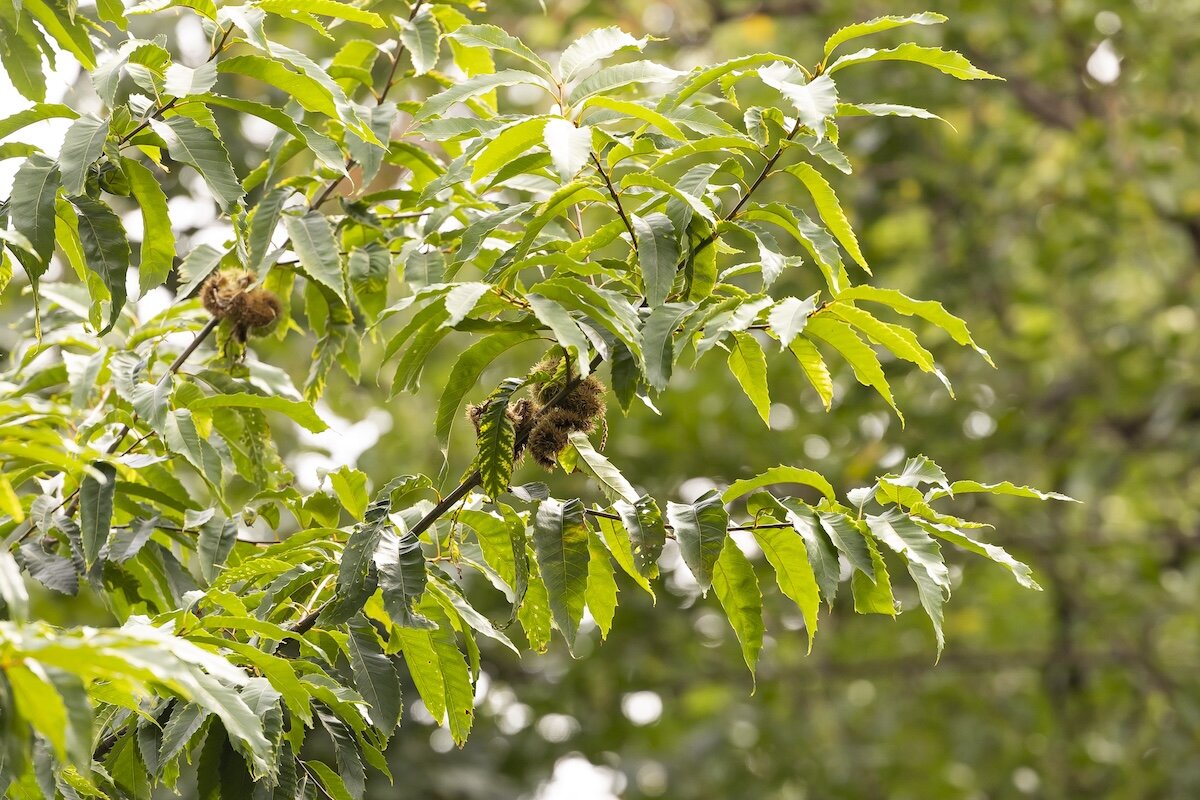
Hybrid American chestnuts growing in Inwood’s Highbridge Park. Credit: Ben Hider
The eventual decision to formalize the Chestnut Trail this past year was a confluence of several factors. NYRP crews have recently honed their public trail building techniques with the Natural Areas Conservancy, and NYC Parks has pushed to label city park trails, creating an opportunity to officially install, name, and apply way-finding signage to the Chestnut Trail.
Public interest in the American chestnut has also grown in recent years—a shift NYRP has tracked through a growing volume of local, national, and international press interest in our chestnut work, as well as successful social media content; one of our chestnut-centric Instagram reels has more than 16.5 million views and counting.
Looking ahead, NYRP plans to organize guided tours and volunteer opportunities along the trail starting next season. Also, as the Highbridge chestnuts continue to produce nuts, NYRP intends to collect these seeds to support our 1,000 Chestnut Challenge: our community science experiment to plant and monitor 1,000 American chestnut saplings throughout New York City.
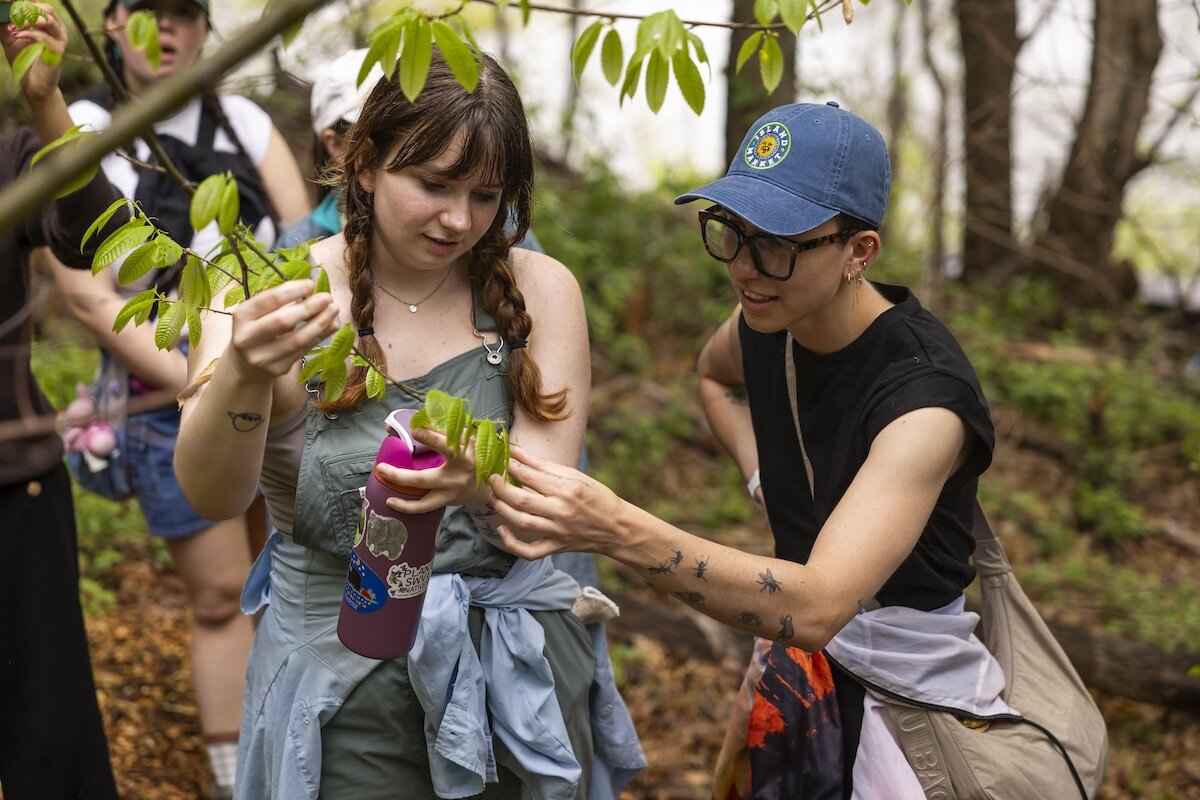
The Chestnut Trail invites New Yorkers to witness and participate in the ongoing recovery of both Highbridge Park and the American chestnut. Photo credit: Ben Hider
“The Chestnut Trail is important for several reasons,” reflects Jason. “Its location offers a unique and historic experience where visitors can sit in the shade of a chestnut tree while looking across the river toward The Bronx—the very area where the chestnut blight was first discovered in 1904—for the first time in over a century.”
“It also welcomes the public to engage with meaningful conservation work on public parkland,” he adds. “Instead of restricting access to this experimental forest restoration site, the trail invites New Yorkers to witness and participate in both the park’s and the American chestnut’s ongoing recovery.”
Sign up for our newsletter and follow us on social media to learn about future opportunities to visit and steward the Chestnut Trail.
Visiting the Chestnut Trail
NYRP encourages visitors to plan your Chestnut Trail visit in advance since signage installation throughout Highbridge is still ongoing. Here’s the route we recommend:
- Enter Highbridge Park at the Grand Staircase along Laurel Hill Terrace, south of 186th Street.
- Turn right at the bottom of the staircase.
- Continue south on the path leading toward the Washington Bridge.
- Descend several sets of stairs until you reach the bottom level.
- Turn left and walk a few feet until you reach a small parking area and lawn.
- On the north side of the lawn, you will see yellow Chestnut Trail blazes on the trees. Enter here, follow the blazes, and enjoy.